How to Cast I Ching with Coins
A step-by-step guide to authentic Liu Yao hexagram analysis using three coins. Master the ancient art of hexagram casting.
Coin-to-Line Quick Reference
✦US Dollar Coins (Recommended)
What You Need to Know
Heads = Yang (3 points) — The "active" side with the portrait
Tails = Yin (2 points) — The "receptive" side with the building
and are "changing lines" — they transform, revealing future development.
Young Yang (7) and Young Yin (8) are "static lines" — they remain as they are.
You cast 6 times to build a hexagram from bottom (Line 1) to top (Line 6).
Pro Tip: Use three identical coins of the same denomination for consistency. US quarters or pennies work perfectly.
US Penny Example (WikiHow)
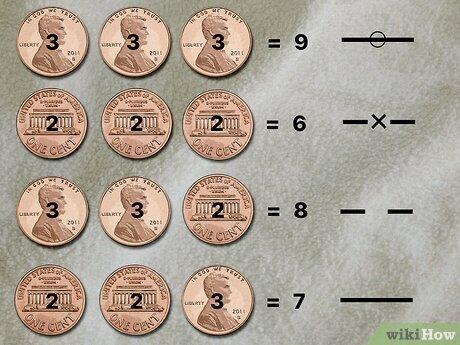
3 Heads = 9 (Old Yang) | 3 Tails = 6 (Old Yin) | 2H1T = 8 (Young Yin) | 1H2T = 7 (Young Yang)
Traditional Chinese Coins
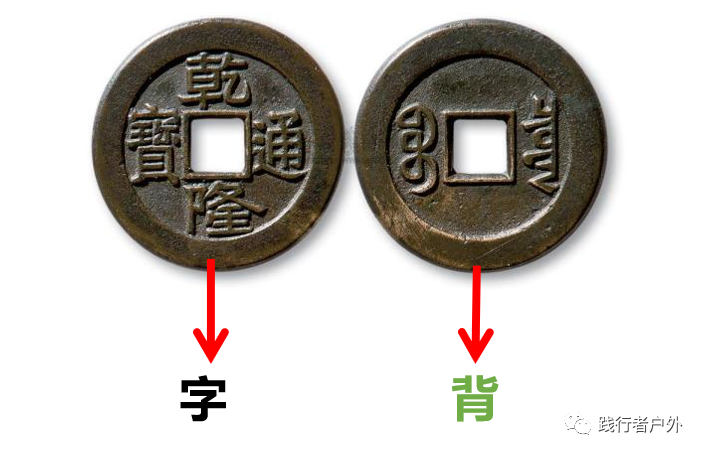
Character side (字) = Yang | Reverse side (背) = Yin
The Complete Casting Process
Follow these six phases to receive authentic I Ching guidance. Each phase builds upon the last, creating a ritual of focus and intention.
Preparation & Sacred Space
Before casting, create an environment conducive to focused intention. This is not superstition — it is the practical psychology of entering a receptive state.
Best Times to Cast
Formulate Your Question
The quality of your question determines the quality of your answer. A vague question yields a vague response.
Good Questions
Avoid These
The Golden Rule: Ask about process and understanding, not . Instead of "Will I get the job?" ask "What energy surrounds my application, and how should I approach it?"
The Casting Ritual
Each cast generates one line of your hexagram. You will cast six times total, from Line 1 (bottom) to Line 6 (top).
1. Cup the Coins
Place three coins in your dominant hand. Cup them gently, feeling their weight and temperature.
2. Focus Intention
Hold your question clearly in mind. Let it resonate in your heart.
3. Shake & Release
Shake the coins gently 6-9 times, then release them onto your flat surface.
The Shake Count
Traditionally, coins are shaken 6 or 9 times — numbers sacred in Taoist numerology. Use whatever number feels natural, but be consistent across all six casts.
Record the Result
Immediately after each cast, record the result before the pattern is disturbed. This is your raw data — treat it with respect.
Recording Template
Build the Hexagram
After six casts, you have all the data needed to construct your hexagram — the pattern of your situation made manifest.
Assembly Method
Line 1 (first cast) goes at the bottom. Line 6 (last cast) goes at the top.
Yang (7, 9) = solid line ———. Yin (6, 8) = broken line — —.
Circle Old Yang (9) and cross Old Yin (6). These lines will transform.
Example Hexagram
Interpretation & Reading
The hexagram is not a fortune — it is a mirror reflecting the energy pattern of your situation and the natural path of transformation.
Read the Main Text
Start with the Gua Ci (hexagram text) for your primary hexagram. This gives the overall theme.
Study Changing Lines
If you have changing lines (6 or 9), read their Yao Ci (line texts). These are the most specific guidance.
Check Future Hexagram
If lines changed, the second hexagram shows where your situation is heading.
Reading Principles
1. The I Ching speaks in archetypes, not specifics. "The dragon rises from the deep" means your potential is emerging — not that you will literally encounter a dragon.
2. Changing lines are the "active" energy in your situation. They represent what is in motion and what requires attention.
3. The text is a starting point, not a command. Use it as a framework for your own intuition and reasoning.
4. Return to the text over days or weeks. The I Ching often reveals deeper layers with time.
Interactive Practice
Practice the casting process. Choose your preferred method: use real coins and record results, or generate digitally.
Shake three real coins, then click the coin icons to match your result
Your Hexagram
Video Guide
Watch the complete casting process demonstrated step by step.
Part 1: Understanding the Basics
Learn the fundamentals: Yin and Yang, line values, and how coins form hexagrams.
Part 2: Full Casting Ritual
Watch a complete reading from preparation through interpretation in real time.
About These Videos
Common Questions
Ready to Cast Your First Hexagram?
Now that you understand the method, try it yourself. Our digital reading tool faithfully replicates the coin-casting process.